madfolk
madfolk - madfolk
madfolk were unsure of everything. In the years since their 2022 debut Floor Turned Blue, the band had undergone constant change: entering their twenties, breakups, lineup shifts, a total reorientation of who they wanted to be as people and musicians. But the long saga of questioning led them to clarity. With a new resolve about the art they wanted to make, they reemerged with their self-titled sophomore album — fiery, confident, and nothing short of a reintroduction of the band we thought we once knew.
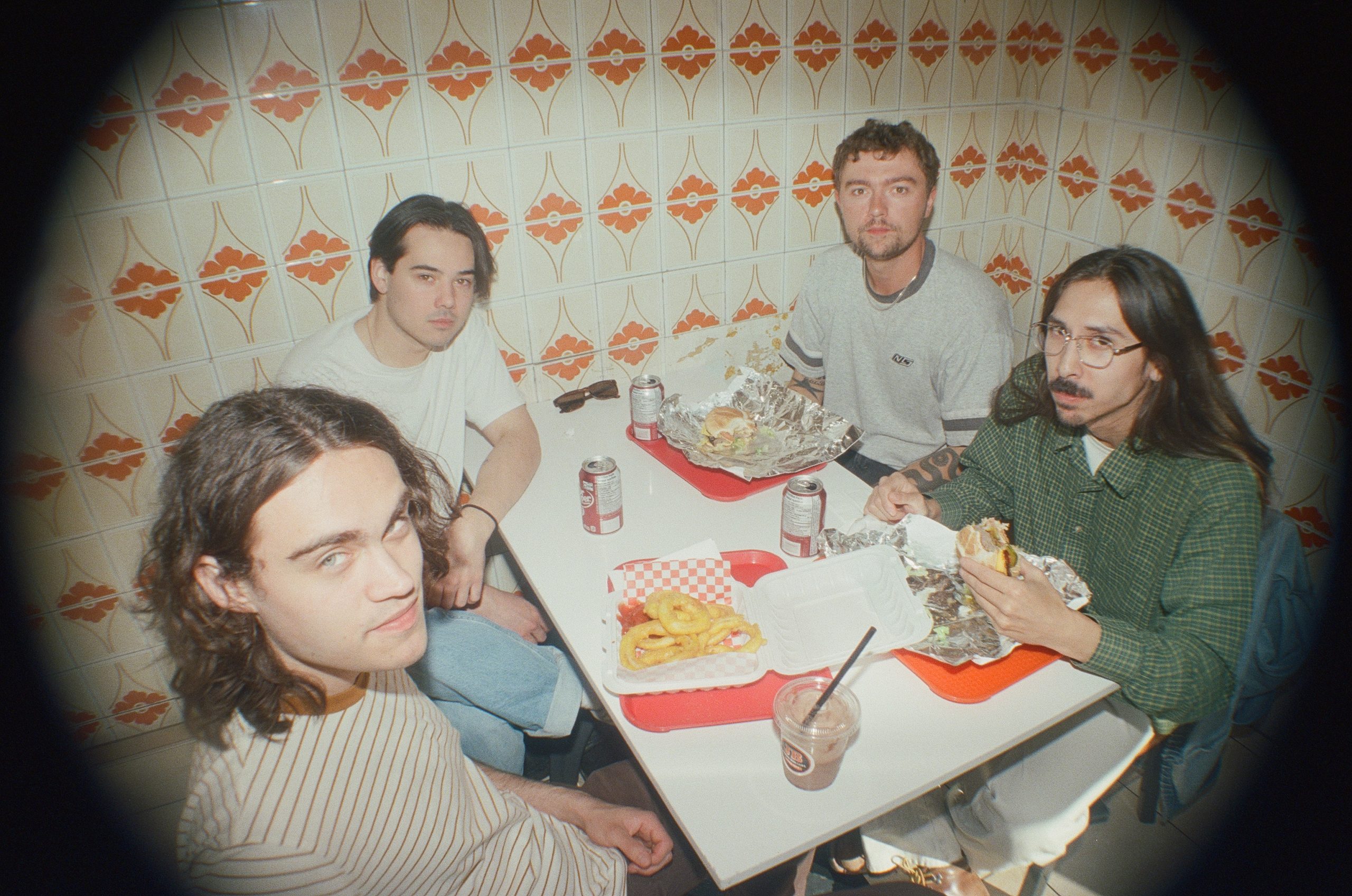
madfolk, their first release for Royal Mountain, is a culmination not only of the last several years, but of a decade spent growing up together and slugging it out in the Toronto music scene. The band’s origins go back to when they were barely teens, when founding members Finn Scott, Michael O’Meara, and Jackson Seaward started jamming together. They spent their youth cutting their teeth playing venues like the Monarch or the departed all-ages vegan bar D-Beatstro, a stage otherwise graced by forebears like PUP and Jeff Rosenstock. Members came and went until the current lineup cohered: Scott on vocals and guitar, O’Meara on bass, Seaward on drums, and Charlie Sills on guitar.
Though madfolk’s interests led to a hybrid aesthetic blending pop-punk, emo, alt-country, and folk influences, there was also a tension in their ascendant years. They felt perpetually adjacent to the scenes in Toronto, then dominated by more stoner garage rock. By the time they were recording early singles and Floor Turned Blue, they were battling a self-consciousness about being “weirder” or “cooler.”
“We were very pop, and probably slicker than we were supposed to be at that age,” Scott now reflects. “I think you need hooks. But it just wasn’t cool in the scene. I definitely felt outside of what was happening.”
“We’re all a couple years older and more confident with the type of music we want to make,” O’Meara adds. “We’re no longer scared of being labeled as pop-punk — now it’s like, bring it on.”
madfolk is a bold refutation of erstwhile insecurity, and a reclamation of what always made the band tick since they first got together. This is partially thanks to a fundamental shift in how madfolk writes material. In the past, songs originated with Scott alone with an acoustic guitar, then bringing it to the group; Floor Turned Blue primarily compiled songs he’d written solo in his late teens. madfolk is the first document of the band as adults, and they made it more collaboratively, figuring out ideas together in the practice space. The result is a go-for-the-throat 26-minute collection, all high energy and forward momentum presented with a crystallized voice and perspective.
Much of madfolk was completed in the span of a year, during which the band lived together a block from where they were recording with friends and longtime collaborators, engineer Dex Piecowye and producer Nick Corcoran. It was the opposite of the belabored recording for Floor Turned Blue: Like everything else that changed for madfolk, the studio experience was about being unvarnished, in the moment, direct, capturing a breakneck performance echoing the whirlwind atmosphere of the band’s live shows.
“I was trying to tap into what made me excited about music when I was first getting into it as a child,” Scott says. “I’m not going to shy away from really simple songs, really poppy songs. If we’re in the control room dancing around and getting excited, that’s the goal. We’re together and we’re having a good time — the guiding principle was songs that facilitated that.”
The urgency mirrored the personal experiences Scott was processing in his lyrics. Having gone through the end of a formative serious relationship, many of his new songs reflected on loss, figuring out who you are, and navigating the fraught landscape of modern dating. “When you’re young, you can define so much through this other person,” he reflects now. “Then you’re out in the cold.” Returning to his favorite type of music was a balm, but then an exorcism — a way of madfolk embracing their true identity in adulthood.
The immediacy is evident from the album’s first notes: a brief squall of distortion before the anthemic “Stick Around,” already a live favorite, launches into gear. That sets the stakes for what’s to come. From there, each song is another burst of crashing drums, propulsive guitars, and giant singalong choruses. In “Stick Around” and “Katherine,” Scott uses those hooks as a vehicle to parse being a newly single man in his twenties, writing about contemporary afflictions like situationships, dating apps, and the way we judge each other online. Elsewhere, the band get introspective. “Older Now” grapples with the onset of real adulthood, while “Signal” captures an early twenties ennui spent wondering when life is really going to “start.”
Across madfolk, the band barely pauses for breath. In “20 Seconds,” they slow it down for a reprise of their singer-songwriter sides. But mostly, these songs capture young minds frazzled by the world we’ve grown up into, all filtered into bulletproof songwriting. Everything barrels headlong into the sky-scraping catharsis of finale “Come On.” “It’s a plea,” Scott says. “Everyone has that thing they wish would happen — romantically, or anything. It’s the yearning that the whole album is touching on.”
madfolk is the kind of album that can only be made by friends who have stuck together through all the highs and lows of life and coming into your own. By the end, they don’t claim to have any answers, but instead present snapshots of all the chaos and messiness inherent in figuring it all out. The band sought to take that uncertainty and angst and make it exciting. Along the way, they also made it profound — creating a sophomore album that is the sound of a band becoming who they were always meant to be.